
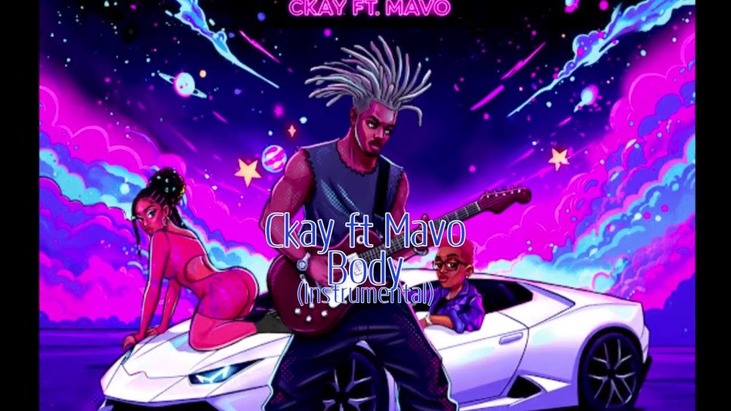
“Body (Danz)” by CKay featuring Mavo is a rhythm-forward Afro-fusion record that prioritizes mood, repetition, and dance-floor immediacy over complex storytelling. Positioned within CKay’s broader artistic trajectory—where emotional vulnerability often meets minimalist production—this track represents a deliberate pivot toward carefree escapism. It is designed as a release valve: a song about dancing through pressure, excess, and social noise, with the body itself becoming the primary language.
Context and Artistic Direction
CKay has built a reputation for emotionally resonant records that blur the lines between Afrobeats, alternative R&B, and pop. With “Body (Danz),” however, the emotional weight is intentionally lightened. The recurring phrase “Nsogbu too much” (loosely translating to “there are too many problems”) sets the thematic premise early: life is stressful, so dancing becomes an act of relief rather than indulgence. This framing has resonated with many listeners who interpret the song as a soundtrack for temporary escape rather than hedonism for its own sake.
Mavo’s inclusion complements this direction. His delivery is less polished and more conversational, adding a streetwise spontaneity that contrasts with CKay’s smoother, melodic restraint. Together, they balance accessibility with personality, a key reason the track has performed well across casual listening spaces and social media.
Lyrical Composition and Language Use
Lyrically, “Body (Danz)” relies heavily on repetition, call-and-response phrasing, and colloquial expressions drawn from Nigerian street slang and pidgin English. The frequent repetition of “body” functions less as literal description and more as rhythmic punctuation. It mirrors the percussive structure of the beat, reinforcing the song’s physicality and dance-driven intent.
“I want to danz
I want to party
Nsogbu too much”
This opening refrain immediately establishes the emotional and thematic direction of the song. “Nsogbu too much,” a pidgin expression meaning “there are too many problems,” frames dancing as a coping mechanism rather than mere leisure. CKay introduces the listener to a state of emotional overload, where celebration becomes a form of escape. The repetition underscores exhaustion and urgency, suggesting that movement and music are the quickest relief from life’s pressures.
“Baby shake your
Body body body body body body body body
Body body body body body body body body
Baby move your
Body body body body body body body body
Body body body body body body body body”
This section serves as the song’s central hook and is built almost entirely around repetition. Lyrically minimal, it is rhythmically effective, turning the word “body” into a percussive element rather than a descriptive one. The emphasis is on physical response—movement, vibration, and flow. Online reactions frequently highlight this part as the most addictive, particularly for dance videos and party settings, where meaning is secondary to feel.
“Make we dey one side
Make we just dey rock
Make we just dey traboski
Our bodies touching”
Here, the song shifts from broad party energy to a more intimate, personal space. The language is casual and conversational, reflecting nightlife interactions rather than emotional intimacy. “Traboski,” slang associated with swagger and stylish movement, reinforces confidence and ease. Physical closeness is presented as spontaneous and situational, aligning with the song’s theme of temporary connection rather than commitment.
“My money is long
My ting is longer
Follow me after the party
To where you belong”
This verse introduces bravado and exaggerated confidence, a familiar trope in Afrobeat party records. The lines combine material success with suggestive undertones, projecting desirability and dominance. While some listeners online interpret this as playful exaggeration, others see it as formulaic. Nevertheless, it functions effectively within the genre’s expectations and maintains the song’s carefree, boastful tone.
“I want to show you
What you never see before
I want to do
What I never do before”
These lines lean into implication rather than specificity. Curiosity and novelty are the focus, allowing listeners to project their own interpretations onto the lyrics. The restraint here is intentional, keeping the song suggestive without crossing into explicit territory. This approach broadens its appeal while sustaining intrigue and replay value.
“E be like say you arrest me
We don dey smoke up since you pull up this your back e
Wetin dey this your back e”?
This section marks a noticeable tonal shift, driven largely by Mavo’s animated delivery. The metaphor of being “arrested” suggests being overwhelmed or captivated by attraction. The lyrics feel intentionally scattered, mirroring the intoxicated, disoriented energy of a late-night environment. Many listeners on social platforms describe this part as raw and humorous, appreciating its unfiltered spontaneity.
“Shey na cana? this your baka bad e dey high me
Be like you work work work work
Touch your body otilo”
Here, the song blends street slang with exaggerated sensory reactions. Attraction is framed almost as a physical high, reinforcing the recurring theme of loss of control through pleasure. The repetition and playful confusion reflect the chaotic excitement of nightlife culture, where impulse often overrides logic.
“Your body na meat pie
Your body na real prize
No dodoyo no dulling traboski swagadoski”
Metaphor dominates this passage, using familiar, everyday imagery to express desire. Comparing the body to food or a “prize” reflects a common stylistic approach in Nigerian pop culture, where relatability often outweighs poetic subtlety. Audience reactions are mixed—some praise the creativity and humor, while others critique the simplicity—but the lines remain memorable and highly quotable.
“She say she get a boyfriend
Me I got a girlfriend
But I want your number I wan dey bomb am”
This is one of the song’s most controversial moments. The lyrics openly acknowledge existing relationships while dismissing their boundaries, reflecting a morally ambiguous nightlife reality. Social media responses are divided: some see it as honest storytelling, others as problematic normalization. Notably, the song presents the situation without moral commentary, maintaining its observational, non-judgmental stance.
“I want to danz
I want to danz
I want to party
Nsogbu too much”
The closing refrain brings the song back to its core message. After navigating attraction, excess, and bravado, the narrative resolves where it began: dancing as release. The cyclical structure reinforces the idea that all experiences within the song orbit a single need—temporary escape from overwhelming pressure. It is this consistency that makes “Body (Danz)” effective as a party anthem, even without a traditional storyline.
Production and Sonic Elements
From a production standpoint, “Body (Danz)” is built on a steady, mid-tempo Afrobeat groove with subtle amapiano influences. The instrumental is sparse but effective: a rolling bassline, crisp percussion, and restrained synth elements leave ample space for the vocals to breathe. This restraint prevents the song from feeling overcrowded, even with its repetitive hooks.
The beat’s hypnotic quality is one of its strongest assets. It is neither overly aggressive nor overly mellow, making it adaptable for clubs, house parties, and personal listening. The production choice reinforces the song’s central theme—movement without pressure, enjoyment without complication.
Audience Reception and Social Media Discourse
Across social media platforms, reactions to “Body (Danz)” have been largely positive, particularly among younger audiences. Many listeners describe the song as “effortlessly catchy” and “perfect for stress relief,” with frequent mentions of how easily it fits into party playlists and dance videos. Short-form content creators have embraced the track for its repetitive hook, which lends itself well to dance challenges and looping clips.
That said, some critiques have surfaced. A segment of listeners feels the song lacks the emotional depth associated with CKay’s earlier work, viewing it as a safe, commercially driven release. Others, however, counter that this stylistic shift demonstrates versatility rather than compromise, arguing that not every record needs to carry emotional heaviness to be artistically valid.
Cultural and Artistic Significance
“Body (Danz)” sits comfortably within a broader trend in Afrobeats where artists increasingly emphasize enjoyment, movement, and communal experience. In a socio-economic climate where many listeners face daily pressures, the song’s message—implicit rather than explicit—feels timely. Dancing becomes both metaphor and solution, a momentary suspension of reality.
The use of pidgin and slang further grounds the track in its cultural context, making it relatable to its core audience while remaining accessible to international listeners drawn to the genre’s rhythm-first appeal.
Conclusion
“Body (Danz)” by CKay featuring Mavo is not a song that seeks to redefine lyrical sophistication or emotional storytelling. Instead, it succeeds by understanding its purpose and executing it efficiently. It is a dance record built on repetition, groove, and cultural familiarity, offering listeners a brief but effective escape from everyday stress.
Whether viewed as a lightweight party anthem or a strategic expansion of CKay’s musical range, the track achieves its goal: it makes people want to dance. In that sense, “Body (Danz)” stands as a functional, culturally resonant entry in contemporary Afrobeats—simple by design, but impactful in execution.
Related Post:
Adekunle Gold “Big Fish” Lyric Review: From Hustle to High TiFola ft. Victony – “Golibe” Review: When Love Dances Between Charm and Chaos
Added by
LyricsSphere
WRITE A COMMENT
You must be logged in to post a comment.
WRITE A COMMENT
You must be logged in to post a comment.
No comments yet