
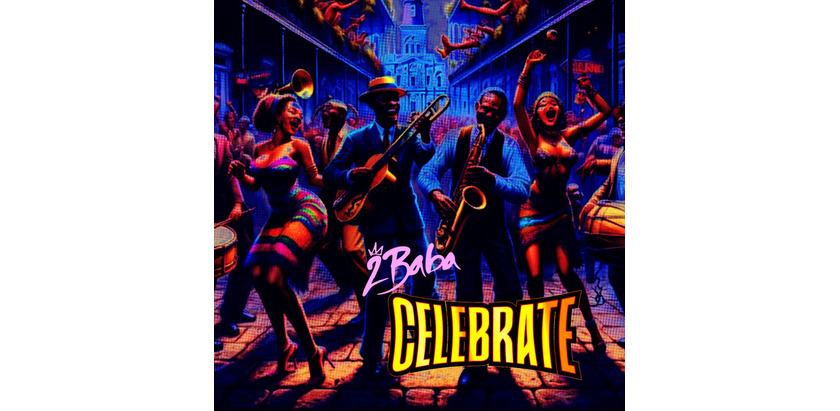
Veteran Nigerian music legend 2Baba (Innocent Ujah Idibia) has built a career not just on hit songs, but on messages that cut across class, age, and social background. Over the years, he has consistently used music as a mirror to society addressing love, unity, struggle, morality, and human behaviour. With Celebrate, 2Baba once again steps into the role of a social commentator, offering listeners a reflective anthem about success, envy, personal boundaries, and the culture of unnecessary judgment.
While Celebrate may sound like a laid-back Afro-pop tune on first listen, a deeper engagement with the lyrics reveals a carefully layered message aimed at today’s society—particularly in an era dominated by social media, public opinion, and constant comparison.
Context and Cultural Relevance of Celebrate by 2Baba
In recent years, Nigerian society like much of the world has become increasingly shaped by digital visibility. Achievements are shared online, lifestyles are scrutinised, and opinions are often given without invitation. Celebrate fits squarely into this context, addressing what many listeners describe as the “online monitoring culture,” where people feel entitled to question how others live, spend, and succeed.
From the very beginning, 2Baba sets the tone with the now-viral line:
“I pop 20 bottles for club (shey na ur papa money)”
This opening lyric immediately sparked reactions across X (formerly Twitter), Instagram, and Facebook, with many fans describing it as both humorous and painfully accurate. Rather than glorifying luxury, the line satirises the constant interrogation successful people face especially in Nigeria—about the source and justification of their wealth.
The follow-up line—
“How dat one take concern you”
—drives home the point: not everything requires public approval.
Related Post:
Adekunle Gold- Only God can Save Me
Getting Paid by Asake and Wizkid Review
Who is really rapping- Song by Blaqbones
Opinions, Perspective, and Individual Reasoning
One of the central ideas in Celebrate is the subjectivity of opinions. 2Baba articulates this clearly when he sings:
“Everybody get opinion / But your opinion na for ur pocket”
This lyric has resonated strongly with audiences, particularly young Nigerians who feel overwhelmed by unsolicited advice and criticism, both online and offline. Social media users have widely quoted this line, often pairing it with captions about minding one’s business or prioritising mental peace.
2Baba expands on this idea with:
“We come from different school of reason / Different people, different thinking”
Here, he acknowledges diversity in background, upbringing, and worldview. Instead of insisting on uniform thinking, the song promotes tolerance and understanding, reminding listeners that disagreement does not automatically require hostility.
Shared Humanity as a Unifying Message
In a subtle but powerful shift, 2Baba introduces a unifying theme:
“Across the mountain across the ocean / Na desame tin dey everybody body”
This lyric speaks to shared human experiences—pain, struggle, ambition, and emotion—regardless of social status or geography. By emphasizing that “it is the same thing in everybody’s body,” 2Baba dismantles the illusion that success separates people from humanity.
Fans have praised this section of the song for its philosophical depth, noting that it reflects 2Baba’s maturity as an artist who has seen fame, criticism, and public pressure firsthand.
Celebration as a Moral Choice
The chorus of Celebrate reinforces the song’s moral stance:
“If person do well I go celebrate”
“No time for hatin I go celebrate”
Rather than simply condemning envy, 2Baba proposes an alternative—celebration. This is not portrayed as weakness or pretence, but as a conscious decision to choose positivity over resentment.
Many listeners online have interpreted this as a call for emotional discipline—the ability to acknowledge another person’s success without feeling threatened. In a society where comparison often breeds bitterness, this message feels both timely and necessary.
“Everybody Get En Time to Shine”
One of the most impactful sections of the song addresses comparison culture directly:
“Everybody get en time to shine / Overtaking is not a crime”
This lyric has gained significant traction on social media, especially among creatives, entrepreneurs, and young professionals. Several fans have described it as a reminder that life is not a race, and that progress happens at different speeds for different people.
The phrase “overtaking is not a crime” challenges the mindset that someone else’s success automatically diminishes one’s own. Instead, it reframes success as non-competitive, encouraging listeners to focus on their own journey.
Envy, Jealousy, and “Bad Belle” Syndrome
2Baba does not shy away from naming the problem directly:
“Envy and jealousy dey strangulate”
This line captures how destructive jealousy can be—not only to relationships but to personal growth. The song repeatedly references “bad belle”, a Nigerian slang for envy-driven behaviour, portraying it as something that ultimately harms the person harbouring it.
Listeners have noted that 2Baba avoids sounding preachy here. Instead, he presents envy as a self-inflicted burden, one that distracts people from appreciating what they already have.
Personal Boundaries and Mental Space
As the song progresses, the narrative becomes more personal and introspective:
“I dey my lane dey try to concentrate”
“My life, I jejely dey navigate”
These lines underline the importance of focus and self-direction. In a world filled with distractions, unsolicited opinions, and external pressure, 2Baba emphasizes staying in one’s lane.
He follows this with one of the song’s most relatable critiques:
“Now na my money you dey calculate”
This lyric has sparked laughter and agreement online, as many listeners relate to the experience of others monitoring their finances. It highlights how curiosity can cross into intrusion, especially when success becomes visible.
Limits, Tolerance, and Self-Respect
Despite the calm tone of the song, 2Baba makes it clear that patience has limits:
“There’s a limit to what I tolerate”
This line introduces the idea of healthy boundaries. While the song promotes peace and celebration, it also acknowledges that disrespect and constant provocation should not be endlessly endured.
This balance between calmness and firmness reflects emotional maturity—an approach many fans describe as “grown-man wisdom.”
Production, Style, and Delivery
Musically, Celebrate is understated but effective. The mid-tempo Afro-pop rhythm allows the lyrics to take centre stage, while 2Baba’s relaxed vocal delivery reinforces the song’s reflective tone.
The repetition of key phrases such as “celebrate”, “play ahate”, and “calculate” serves both musical and thematic purposes, ensuring the message stays with the listener long after the song ends.
Public Reception and Social Media Reactions
Audience response to Celebrate has been largely positive. Across social platforms, fans describe the song as:
- “Relatable”
- “A lesson without shouting”
- “Music for people tired of negativity”
While a few critics have pointed out the song’s repetitive structure, most listeners agree that its message-driven focus is its greatest strength.
Final Thoughts
Celebrate is more than an Afro-pop track—it is a reflection on modern society. Through simple language and relatable scenarios, 2Baba addresses envy, comparison, personal boundaries, and the importance of positivity.
In choosing celebration over hatred, focus over distraction, and self-growth over competition, Celebrate stands as a mature anthem for anyone navigating success, criticism, or personal progress in a noisy world.
Once again, 2Baba proves that his relevance is not just musical, but philosophical—grounded in lived experience and timeless wisdom.
Added by
LyricsSphere
WRITE A COMMENT
You must be logged in to post a comment.
WRITE A COMMENT
You must be logged in to post a comment.
Critical Analysis of “LALALA” by Young John feat. Rema – Lyrics Sphere
December 24, 2025 at 1:36 pm
[…] Critical Analysis of “Celebrate” by 2Baba […]